
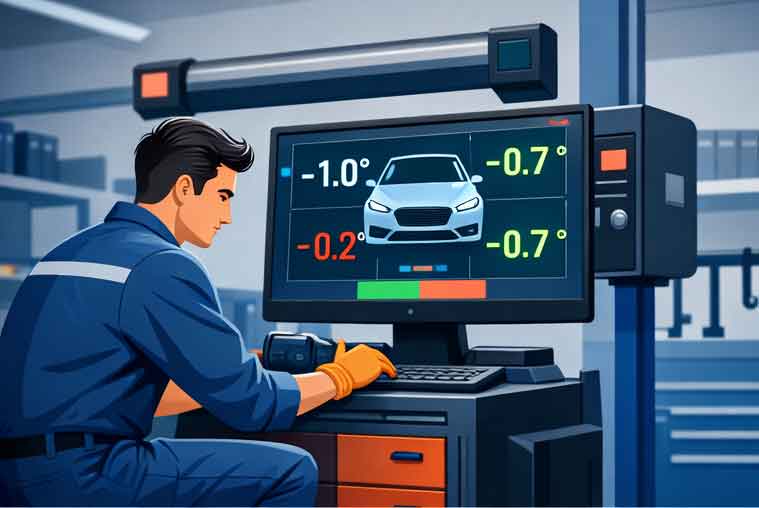
If your car pulls to one side, steering feels off-centre, or tyres are wearing unevenly, wheel alignment is often the hidden cause.
In Perth, wheel alignment isn’t just about comfort.
It directly affects vehicle safety, tyre lifespan, fuel efficiency, and handling, especially on local roads that include freeways, suburban streets, and uneven regional highways.
This guide covers everything Perth drivers need to know about wheel alignment — how it works, when it’s needed, how Perth conditions affect alignment, and what to expect from a professional wheel alignment service.
What Is A Wheel Alignment?
Wheel alignment refers to adjusting the angles of the wheels so they meet manufacturer specifications and point in the correct direction relative to the road and vehicle body.
Proper wheel alignment ensures:
- Even tyre contact with the road
- Straight-line stability
- Predictable steering
- Reduced tyre wear
- Safer braking and cornering
Most local mechanics agree that wheel alignment is one of the most overlooked yet important vehicle maintenance tasks.
Wheel Alignment vs Wheel Balancing (Common Confusion)
These two services are often mixed up.
Wheel alignment adjusts wheel angles while Wheel balancing corrects weight distribution within the tyre and wheel
Key differences:
- Wheel Alignment
- Wheel Balancing
- Fixes steering pull
- Fixes vibration
- Affects tyre wear
- Affects ride smoothness
- Adjusts suspension geometry
- Adds small weights to wheels
Both are important. They simply solve different problems.
Why Wheel Alignment Is Especially Important in Perth, WA
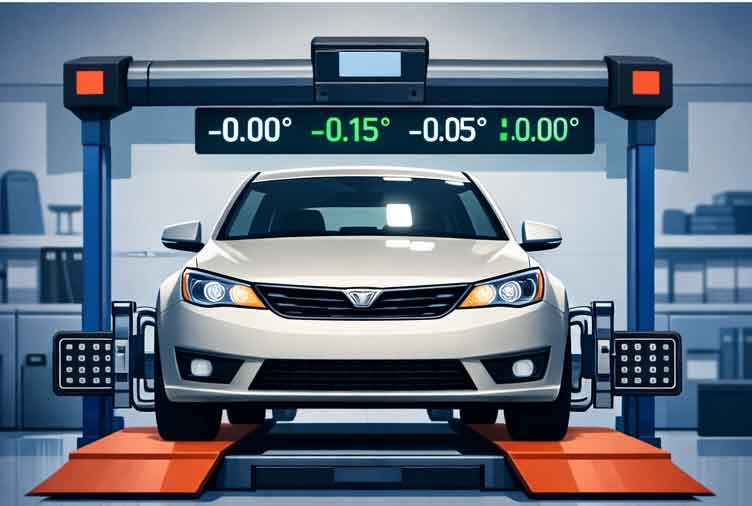
Perth driving conditions can be tough on suspension and steering components.
Common local factors include:
- Heat causing rubber suspension bushings to degrade
- Potholes after winter rains
- Long freeway commutes at higher speeds
- Speed humps in suburban streets
- Uneven coastal roads and rural highways
According to the WA Road Safety Commission, proper vehicle maintenance plays a key role in reducing road incidents and improving safety outcomes across Western Australia.
Wheel alignment is a simple way to stay safer on Perth roads.
Local mobile mechanic and co-owner of Auto Smart Mechanical, Luke Adams says:
“Wheel alignment is not just about reducing your tyre wear and tear, it’s also about safety”
Signs a Car Needs Wheel Alignment
Wheel alignment issues often develop slowly, which makes them easy to ignore.
Common symptoms include:
- Car pulling left or right while driving straight
- Steering wheel not centred
- Uneven tyre wear (inside or outside edges)
- Steering feels loose or unstable
- Tyres squealing when turning
- Reduced fuel efficiency
- Steering wheel vibration at speed
If any of these are present, most mechanics recommend checking wheel alignment before tyres wear out prematurely.
How Often Should Wheel Alignment Be Checked?
There’s no single rule, but most local automotive professionals recommend:
- Every 10,000–15,000 km
- With every new set of tyres
- After hitting a pothole or kerb
- After suspension or steering repairs
- If steering or handling feels different
Perth drivers who frequently travel on freeways or rough suburban roads may benefit from more frequent alignment checks.
The 3 Main Wheel Alignment Angles Explained
Modern wheel alignment focuses on three key angles.
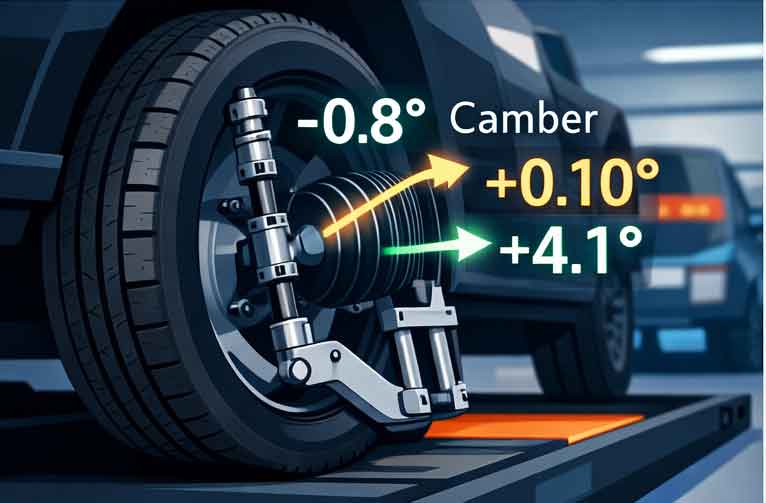
1. Camber
Camber is the inward or outward tilt of the wheel when viewed from the front.
Too much negative camber wears inner tyres
Too much positive camber wears outer tyres
Incorrect camber reduces cornering stability
2. Toe
Toe refers to whether tyres point inward or outward when viewed from above.
Toe-in or toe-out increases tyre scrub
Incorrect toe is a major cause of rapid tyre wear
Even small toe errors can destroy tyres quickly
3. Caster
Caster affects steering stability and return-to-centre.
Helps the steering wheel straighten after turns
Improves high-speed stability
Often adjusted during full wheel alignment services
Front Wheel Alignment vs Four Wheel Alignment
Not all vehicles need the same type of alignment.
Front Wheel Alignment:
- Adjusts front wheels only
- Common for older vehicles with solid rear axles
Four Wheel Alignment:
- Adjusts all wheels
- Required for most modern vehicles
- Improves handling and tyre wear
For modern cars, four wheel alignment is usually the recommended option.
Wheel Alignment and Tyre Wear: The Real Cost of Ignoring It
Misaligned wheels shorten tyre lifespan significantly.
Uneven wear patterns include:
- Inner edge wear
- Outer edge wear
- Feathering or scalloping
- Cupping
According to tyre safety guidance published by WA Department of Transport, uneven tyre wear increases braking distance and reduces grip.
In Perth’s dry summers and wet winters, good tyre contact is critical.
Local mobile mechanic and co-owner of Auto Smart Mechanical, Scott Oliver says:
“Ensuring our customers are aware of the costs of ignoring wheel alignment helps keep our customer’s vehicles safe and reduce potential problems further down the track”
Fuel Efficiency and Wheel Alignment
Wheel alignment affects rolling resistance.
When wheels are misaligned:
- Tyres drag instead of rolling freely
- Engine works harder
- Fuel consumption increases
Many Perth drivers notice better fuel economy after correcting alignment, especially on longer freeway commutes.
Wheel Alignment After New Tyres: Why It Matters
Installing new tyres without checking alignment is a common mistake.
Most tyre specialists recommend:
- Alignment immediately after tyre replacement
- Alignment before fitting expensive tyres
- Alignment to protect manufacturer warranties
Failing to align new tyres can ruin them in just a few thousand kilometres.
Wheel Alignment For 4WDs, SUVs, And Utes In Perth
Larger vehicles face unique alignment challenges.
Common Perth scenarios include:
- Towing boats or caravans
- Off-road driving
- Lift kits or suspension upgrades
- Heavy loads in trays or boots
Four wheel alignment is especially important for:
- 4WDs
- Dual-cab utes
- SUVs
- Commercial vehicles
Local mechanics often recommend regular alignment checks for vehicles used for towing or work purposes.
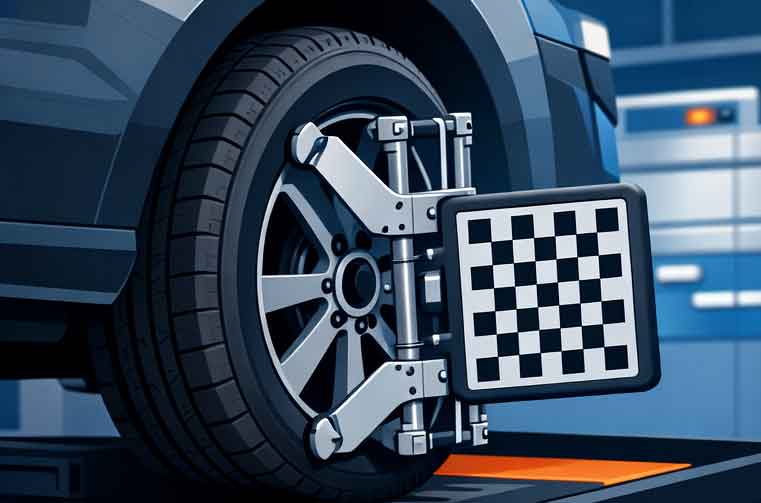
Is Wheel Alignment a Safety Issue?
Yes — absolutely.
Misaligned wheels can:
- Increase stopping distance
- Reduce steering control
- Cause sudden tyre failure
- Make emergency manoeuvres unpredictable
Wheel alignment plays a direct role in maintaining safe handling characteristics.
How Long Does A Wheel Alignment Take?
Typical timeframes:
- Front wheel alignment: 30–45 minutes
- Four wheel alignment: 45–90 minutes
Time varies depending on:
- Vehicle type
- Suspension condition
- Rusted or seized components
- Required adjustments
What Affects Wheel Alignment Accuracy?
Several factors influence alignment results:
- Worn suspension bushes
- Bent steering components
- Incorrect tyre pressures
- Aftermarket modifications
- Vehicle load during adjustment
Most mechanics recommend fixing underlying suspension issues first for long-term alignment accuracy.
Wheel Alignment and Perth Road Conditions
Perth roads vary widely across suburbs.
Common contributors to misalignment include:
- Speed humps in residential streets
- Roadworks and temporary surfaces
- Coastal erosion effects
- Uneven rural highways
- Poorly maintained car parks
Local councils across Perth regularly resurface roads, but alignment issues remain common. Updates on road conditions are often published by Main Roads Western Australia.
Wheel Alignment Myths (Busted)
“Alignment is only needed if tyres are worn”
False. Handling and safety issues often appear first.
“A straight steering wheel means alignment is fine”
Not always. Toe and camber can still be incorrect.
“Wheel alignment is expensive”
Compared to tyre replacement, alignment is relatively low cost.
“New cars don’t need alignment”
Even new vehicles can arrive misaligned after transport.
Choosing a Trustworthy Wheel Alignment Service in Perth
When searching for wheel alignment Perth services, consider:
- Experience with local road conditions
- Clear explanations of findings
- Honest recommendations
- Strong local reviews
- Knowledge of different vehicle types
Most reputable Perth mechanics focus on education and transparency, not pressure selling.
Wheel Alignment and Roadworthy Inspections
Wheel alignment may be flagged during inspections if:
- Tyres are excessively worn
- Steering is unstable
- Suspension components are damaged
According to WA Department of Transport, vehicles must meet minimum safety standards to remain road legal.
Alignment contributes to meeting those standards.
Frequently Asked Questions
How much does wheel alignment cost in Perth?
Prices vary by vehicle and alignment type. Four wheel alignment typically costs more than front alignment.
Wheel alignment costs typically start from around $85 for a small car.
Can wheel alignment fix steering wheel vibration?
Vibration is usually related to wheel balancing, but alignment can contribute.
Is wheel alignment needed after suspension upgrades?
Yes. Any suspension modification changes alignment geometry.
Does wheel alignment affect tyre noise?
Yes. Incorrect alignment often causes tyre noise during turns or at speed.
Wrapping Up: Wheel Alignment Is Preventative Maintenance
Wheel alignment isn’t about fixing a breakdown.
It’s about:
- Protecting tyres
- Improving safety
- Enhancing comfort
- Reducing running costs
- Driving confidently on Perth roads
Most experienced mechanics agree that regular wheel alignment checks are one of the smartest vehicle maintenance decisions Perth drivers can make.
For vehicle owners across Western Australia, staying aligned means staying safer, smoother, and more in control — every time the key turns.
Book your car in for an alignment check with the wheel alignment experts at Auto Smart Mechanical.
Call us on 1300 70 70 48 or 0408 877 796, or book an appointment here.
Book in for a wheel alignment for just about all makes and models of vehicles in all sizes… hatchbacks, sedans, station wagons, 4WD (4×4), AWD, utes, pickup trucks, vans, trucks (up to 6 tonne) in Perth North, East and West.
Here is a list of the brands we look after…
Australian, American, Japanese, Taiwanese, Chinese Vehicle Wheel Alignment:
European Car Wheel Alignment:
- Ford
- Holden
- Toyota
- Mazda
- Lexus
- Hyundai
- Nissan
- Mitsubishi
- Kia
- Daihatsu
- Suzuki
- Honda
- Subaru
- Jeep
- RAM
- VW
- BMW
- Mercedes
- Audi
- Land Rover
- Range Rover
- Porsche
- Peugeot
- Fiat
- Chrysler
- Alfa Romeo
- Jaguar
- Mini
- Saab
- Volvo
- Skoda
- Citroen
- Renault