
Is it ‘time’ for a timing belt replacement?
If you know or suspect your car’s timing belt is bad, cracked, old, worn, stretched or broken entirely, book a 5-star-rated mobile mechanic in Perth to get you back on the road.
What Is A Timing Belt?
A timing belt is a rubber belt with teeth that connects your engine’s crankshaft to its camshafts.
It keeps the engine’s moving parts working together at the right time, which is essential for your engine to run properly.
Timing Belt Function In Engine Timing
The timing belt controls when your engine’s valves open and close during operation.
It links the crankshaft at the bottom of your engine to the camshaft at the top.
When the crankshaft turns, it moves the pistons up and down inside the cylinders.
The timing belt transfers this rotation to the camshaft, which opens and closes the valves.
This coordination has to happen at just the right moments.
The belt is made from reinforced rubber with teeth along the inside, locking into grooves on both the crankshaft and camshaft gears.
This design stops slipping and keeps the engine’s timing spot on.
If the timing belt breaks, the valves and pistons can collide in many engines, causing severe damage that costs thousands to fix.
Key Differences Between Timing Belts and Timing Chains

Timing chains are metal and do the same job as timing belts, but they work differently.
Timing belts are rubber with reinforcing cords inside, running quietly but needing replacement every 90,000 to 150,000 kilometres.
They sit behind protective covers to keep out dirt and debris.
Timing chains, on the other hand, are metal roller chains—think bicycle chains.
They usually last much longer than belts and often don’t need replacement during the engine’s life.
They’re a bit noisier but require less maintenance overall.
Many older cars use timing belts because they’re cheaper to manufacture.
Newer vehicles are shifting toward timing chains for their durability.
If you’re not sure which you have, check your owner’s manual.
Role of the Timing Belt in Synchronising Pistons and Valves
The timing belt makes sure pistons and valves don’t crash into each other while the engine runs.
The pistons move up and down inside the cylinders while the valves open and close above them.
Your engine needs the intake valve open when the piston moves down to draw in fuel and air, and the valve must close before the piston moves back up to compress the mixture.
After combustion, the exhaust valve opens as the piston rises to push out burnt gases.
The timing belt keeps this dance happening at exactly the right moments.
In interference engines, pistons and valves share the same space at different times—without proper timing, they’ll collide and cause major damage.
In non-interference engines, there’s built-in clearance, so if the belt breaks, the engine will stop but probably won’t suffer internal damage.
When To Replace A Timing Belt
Timing belt replacement depends on your vehicle manufacturer’s recommendations, visible wear, and the belt’s age.
Most timing belts need replacement between 96,000 and 160,000 kilometres, though specific intervals vary by make and model.
Recommended Timing Belt Replacement Intervals
Your vehicle’s manufacturer sets specific timing belt replacement intervals based on testing.
Most recommend replacement every 96,000 to 160,000 kilometres.
You’ll find your vehicle’s exact interval in the owner’s manual or service schedule.
Some vehicles need timing belt service as early as 80,000 kilometres, while others can go up to 160,000 kilometres.
The interval depends on engine design and belt construction.
It’s wise not to wait until the maximum interval—replacing your timing belt within the recommended range helps prevent sudden failure.
Labour costs for timing belt replacement are similar whether you do it as scheduled maintenance or after it breaks.
But a broken belt can destroy your engine and rack up a massive repair bill.
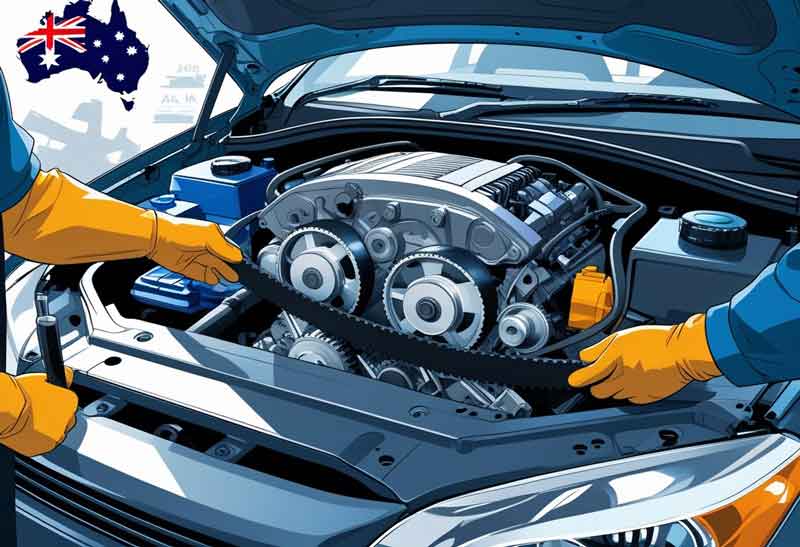
Signs And Symptoms Of Timing Belt Problems
A ticking noise from your engine often signals timing belt issues.
This sound pops up when the belt’s teeth wear down or the belt loosens, and you might notice it gets louder with engine speed.
Visible cracks or fraying mean it’s time for a new belt. Check your timing belt during routine service appointments.
Oil leaks near the timing belt can damage the rubber and make it wear out faster.
Your engine may misfire or run roughly if the timing belt slips, because the crankshaft and camshafts lose synchronisation.
In worse cases, your engine just won’t start at all.
Age Versus Mileage Considerations
Both age and mileage affect timing belt wear.
Replace your timing belt based on whichever comes first—the kilometre interval or the time interval.
Most manufacturers recommend replacement every five to seven years, even if you haven’t hit the kilometre limit.
Rubber degrades over time, no matter how much you drive.
A timing belt on a car that sits idle still breaks down from heat, humidity, and age. The belt gets brittle and loses flexibility.
If you drive infrequently, keep an eye on your belt’s age.
A six-year-old belt with only 50,000 kilometres still needs replacement as urgently as one at 160,000 kilometres.
Timing Belt Replacement Cost In Perth
The cost of replacing a timing belt depends on your vehicle type and whether you need extra parts replaced.
Labour makes up most of the expense since your local Perth mechanic will need several hours to get to and replace the belt.
Breakdown Of Labour And Parts Costs
Labour charges account for most of your timing belt replacement cost.
Most jobs take three to five hours, though some vehicles take longer.
Many mechanics suggest replacing the water pump at the same time.
Doing this while the engine is already open saves you money down the track, since the labour’s already being done.
Other parts that might need replacement include the timing belt tensioner and various seals or gaskets.
Your mechanic will check these during the job and let you know if they need attention.
Factors Influencing Timing Belt Replacement Cost
The price you pay for timing belt replacement depends on your vehicle, where you get the work done, and which parts you pick.
Car Make And Engine Type
Your vehicle’s make and model directly affect replacement costs.
Simple four-cylinder engines are easier to work on. V6 and V8 engines need more labour, since mechanics need extra time to get to the timing belt.
European luxury brands like BMW, Mercedes-Benz, and Audi generally cost more to service than Japanese or Korean cars.
Some cars need a lot of disassembly to reach the timing belt, which can add hours and increase your bill.
If your car uses a timing chain instead of a belt, timing chain replacement usually costs more due to the extra complexity.
Quality Of Replacement Parts
You can choose between aftermarket and genuine manufacturer parts. Aftermarket timing belts cost less, but quality can vary.
Genuine parts cost more but come with manufacturer backing and better warranties.
Most mechanics recommend timing belt kits that include tensioners, idler pulleys, and sometimes water pumps.
Replacing these parts together helps prevent future breakdowns, since they wear out at similar rates.
You’ll save money by doing everything at once rather than paying for separate labour later.
Consequences Of A Broken Timing Belt
A broken timing belt can destroy your engine in seconds, especially in interference engines where pistons and valves share the same space.
The damage goes beyond immediate mechanical failure—you could end up stranded, facing expensive repairs, and maybe even safety risks.
Risk Of Engine Damage And Piston Impact
If your timing belt breaks, the camshaft and crankshaft lose synchronisation. The valves stop moving, but the pistons keep going.
In interference engines, this means pistons and valves collide.
The pistons hit the open valves hard, bending or breaking them, and the piston crowns can crack or deform from the impact.
Your cylinder head might also take a beating in these violent collisions.
The severity depends on engine speed when the belt fails—at idle, damage might be limited to bent valves, but at highway speeds, the force is much greater.
You could end up with broken valves, damaged pistons, bent connecting rods, or even a cracked engine block.
Non-interference engines avoid valve-to-piston contact, but the engine still stops immediately and other parts might get damaged from the sudden loss of
timing.
Common Damage Types:
- Bent or broken valves
- Cracked or damaged pistons
- Damaged cylinder head
- Broken rocker arms
- Bent connecting rods
- Contaminated oil system from metal debris
Symptoms Of A Broken Belt
Your engine stops running instantly when the timing belt breaks.
There’s no sputtering or slow decline—just an instant shutdown.
You’ll lose power steering and brake assist as the engine quits.
Outside of this, you’ll receive signs the timing belt could be due for replacement.
You might hear a ticking noise from the engine bay—that’s usually a sign of wear.
Your engine may misfire or run rough if the belt has stretched or slipped. Sometimes, the check engine light pops on if the timing is off.
Starting can get tough, and acceleration might be lousy. These symptoms suggest the belt has slipped teeth rather than snapped completely.
Visual inspection might show cracks, fraying, or a shiny, glazed look on the belt.
If your water pump fails at the same time (since many vehicles use the timing belt to drive it), overheating can show up alongside timing problems.
Emergency Procedures And Immediate Actions
Stop driving right away if you think your timing belt just failed.
If you keep cranking the engine, especially in interference engines, you’ll just make things worse.
Every attempt to start after a failure increases the chances of valve-to-piston contact. It’s just not worth the risk.
If your engine dies while you’re driving, pull over as safely as you can. Turn on your hazard lights.
Don’t try to restart the engine. It’s tempting, but really—don’t do it.
Call for a tow truck. Driving or restarting could turn a minor issue into a disaster.
Let a professional diagnose things before you even think about starting the engine again.
Jot down what happened for your mechanic.
Try to remember how the engine acted, any weird noises, and whether any warning lights popped on.
That info goes a long way in figuring out what broke. If you can, check your records to see if the timing belt was overdue.
Manufacturers usually say to swap it out every 90,000 to 160,000 kilometres.
Timing Chains:
Comparison and Replacement Considerations
Timing chains are a different animal than belts.
They last much longer, but when it’s time for replacement, they usually cost more —and they’re not totally trouble-free either.
Timing Chain Versus Timing Belt Longevity
Timing chains use metal links, kind of like a beefy bicycle chain. That makes them way tougher than rubber belts.
Most chains go 240,000 to 400,000 kilometers.—sometimes even outliving the engine.
Timing belts, on the other hand, usually need swapping every 96,000 and 160,000 kilometres.
Because they last so long, you don’t have to budget for chain replacement very often.
But you do need to keep up with oil changes, since clean oil keeps the chain and its bits lubricated.
Key Lifespan Differences:
| Component | Expected Lifespan | Replacement Schedule |
| Timing Chain | 240,000+ kms | Rarely needed |
| Timing Belt | 96,000 and 160,000 kilometres | Regular intervals |
Timing Chain Replacement Cost
If you do need a new timing chain, replacement usually costs vary.
The chain sits deep inside the engine, so the timing belt technician will have to remove a lot of parts just to get to it.
They’ll usually swap out the tensioners and guides too—those keep the chain running straight and tight.
Still, most folks never need to replace a timing chain at all. It’s rare, but not impossible.
Common Issues with Timing Chains
Chains can stretch over time, especially if you skip oil changes or use cheap oil. When the links elongate, the chain loosens up.
Warning Signs Include:
- Rattling or ticking noises from the front of your engine, especially at startup
- Check engine light on the dash
- Misfires or rough running
- Metal shavings in your oil
- Tensioners and guides can also wear out
If they fail, the chain might slap around or even skip teeth, and that can potentially damage the engine.
Timing Belt Longevity:
Preventative Maintenance
Good habits and decent parts go a long way toward keeping your timing belt alive.
They help you avoid unwanted issues between scheduled changes.
Regular Inspection Practices
Take a look at your timing belt every 20,000 to 30,000 kilometres, or whenever you’re in for service.
Spotting cracks, fraying, or a glazed surface early can save your engine.
Watch for oil leaks near the belt. Oil eats away at the rubber and speeds up wear. Check the tension, too.
Loose belts can slip and mess up the engine; too tight, and you’ll wear out bearings and the belt itself.
Weird noises like squealing or ticking from the engine bay?
That’s often a timing belt warning. If your engine starts acting up—rough idle, hard starts—pay attention.
Keep notes on all your inspections and maintenance.
It’s easy to forget when you last checked, and good records make planning easier.
Use High-Quality Parts
Don’t go cheap with a timing belt.
OEM or high-end aftermarket belts use better rubber and hold up against heat, oil, and wear much longer than bargain brands.
Swap out related parts—water pumps, tensioners, idler pulleys—when you do the belt.
Old tensioners can’t keep the right tension, and bad pulleys can seize up and snap the belt.
Yeah, better parts cost more upfront, but they’re worth it. You’ll get more miles and way less risk of major engine damage.
Going cheap might save you a bit now, but if the belt fails early, you’ll pay a lot more later.
Frequently Asked Questions
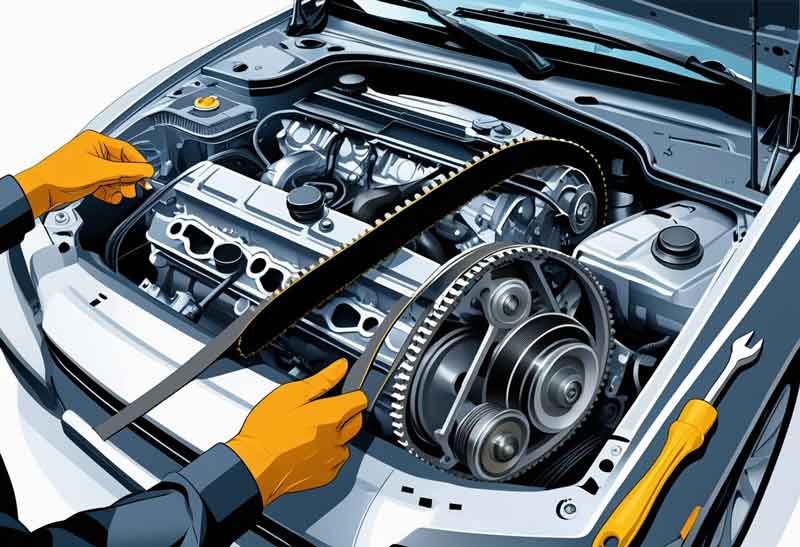
Timing belt care brings up a lot of practical questions.
Knowing the basics helps you make smarter choices about when to replace and what to watch for.
How often should I have my vehicle’s timing belt replaced?
Most carmakers say between 96,000 and 160,000 kilometres is when to replace the timing belt.
Your owner’s manual will have the exact number for your car.
If you drive in extreme heat, dust, or haul heavy loads, your belt might wear out faster. Conditions matter.
Don’t forget about age, either.
Even if you barely drive, swap the belt every five to seven years. Rubber just doesn’t last forever.
What are the signs that indicate a timing belt may need replacement?
If you hear clicking or ticking from the engine, it could mean the belt’s loose or worn. That’s usually because it’s lost tension or is starting to slip.
If you can see the belt, look for cracks, fraying, or missing teeth. Visible damage is a clear sign it’s time to replace.
Engine running rough, hard starts, or misfires?
Those are classic symptoms of a failing belt. The camshaft and crankshaft lose sync when the belt wears out.
Is it necessary to replace the water pump alongside the timing belt?
Absolutely—replace the water pump when you do the timing belt.
Both parts live in the same spot, so the mechanic has to take off the same pieces to get to them.
Doing both at once saves you money on labour.
If the pump fails after a new belt, you’ll pay for the same work all over again.
Most timing belt kits come with a new water pump, tensioners, and other bits.
Swapping everything together means fewer surprises down the road.
What could happen if I neglect to replace a worn timing belt?
If the belt breaks, you could destroy your engine—especially if you have an interference engine.
Pistons and valves can hit each other, bending or breaking parts.
Sometimes, the engine is a total loss. Fixing or replacing it costs way more than just doing the belt on time.
Even in non-interference engines, a snapped belt leaves you stranded. The engine just won’t run without it.
How long does it typically take to replace a timing belt in a vehicle?
Most timing belt jobs take three to six hours. It really depends on your car’s layout and how much stuff the timing belt mechanic has to remove.
Some cars are easy, but front-wheel drive or transverse engines usually take longer because access is tight.
If your mechanic replaces the water pump, tensioners, or pulleys too, expect the job to stretch out a bit more.
Can a timing belt replacement affect my car’s fuel efficiency and performance?
If your old timing belt was slipping or worn, swapping it out for a new one can give your engine a bit of a boost.
When the camshaft and crankshaft stay in sync, you get better combustion timing and, honestly, a more efficient engine overall.
After replacement, you might notice the engine running smoother.
It could sound quieter, and you may feel a quicker response when you hit the gas.
Usually, changing the timing belt doesn’t really change your fuel efficiency by itself.
But if the old belt messed with combustion or caused misfires, you could see a small bump in fuel economy after the fix.
Do mobile mechanics replace timing belts or will I need to go to a local mechanic workshop?
For car timing belt replacement near me, as replacing the timing belt exposes the internal engine components, it is best to have this work done at a local workshop.
The mechanic will need between 3-6 hours with the vehicle, so be sure to allow for this, especially if the mobile mechanic is coming to your workplace to replace the timing belt and you’re wanting to drive your car home that day.
Which makes and models of cars do you replace timing belts for?
The timing belt experts here at Auto Smart replace timing belts for all makes of cars including Aussie favourites like Holden and Ford, through to European makes like BMW, Mercedes, Audi, Volkswagen and more, and others like Mitsubishi, Hyundai, Toyota and others.
Get specialist help for timing belt replacement for all sizes of vehicles including hatchbacks, sedans, station wagons, 4WDs, SUVs, utes and trucks across Perth northern suburbs, eastern suburbs and western suburbs.
Wrapping Up
A timing belt is an essential part of the smooth operation of your vehicle.
Preventative maintenance of your vehicle is the best way to keep on top of any major repairs, particularly the timing belt.
Book your car in for a mobile service nearby with the timing belt experts at Auto Smart Mechanical – we come to your home or workplace.
Call us on 1300 70 70 48 or 0408 877 796, or book an appointment here.
Get your car timing belt serviced and replaced for just about all makes and models of vehicles in all sizes… hatchbacks, sedans, station wagons, 4WD (4×4), AWD, utes, pickup trucks, vans, trucks (up to 6 tonne).
Here is a list of the brands we look after…
Australian, American, Japanese, Taiwanese, Chinese Vehicle Timing Belt Service And Replacement:
European Car Timing Belt Replacement:
- Ford
- Holden
- Toyota
- Mazda
- Lexus
- Hyundai
- Nissan
- Mitsubishi
- Kia
- Daihatsu
- Suzuki
- Honda
- Subaru
- Jeep
- RAM
- VW
- BMW
- Mercedes
- Audi
- Land Rover
- Range Rover
- Porsche
- Peugeot
- Fiat
- Chrysler
- Alfa Romeo
- Jaguar
- Mini
- Saab
- Volvo
- Skoda
- Citroen
- Renault